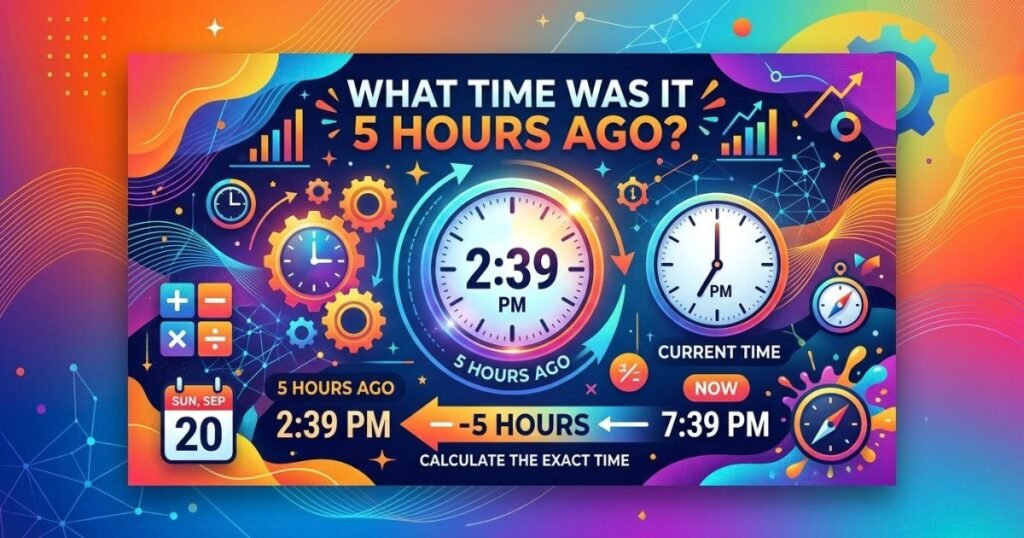

Have you ever checked the clock and wondered, “What Time Was It 5 Hours Ago?” It can be confusing when you need to remember a past moment, check a deadline, or understand a time difference quickly. Finding What Time Was It 5 Hours Ago doesn’t have to be difficult when you know the right method. Whether you are searching for what time it was 10 hours ago, what time was it 11 hours ago, what time was it 15 hours ago, what time was it 6 hours ago, or what time was it 7 hours ago, a simple calculation can give you the answer.
This guide explains how a time calculator work process helps you understand time clock times, calculate hours, and use tools like calculator.net time calculator to solve common time questions. You will learn how to find answers for 12 hours ago, what time, what time was it 13 hours ago, what time was it 14 hours ago, what time was it 16 hours ago, what time was it 17 hours ago, and what time will it be in 8 hours. We will also explore how to use an hours calculator, time clock calculator, hour calculator, work hours calculator, work time calculator, and hours worked calculator for accurate results.
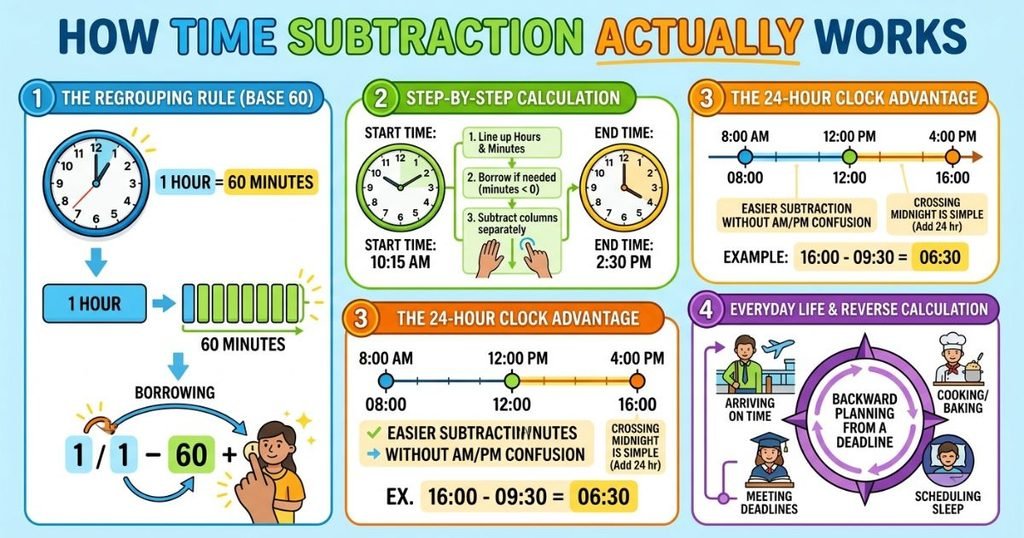
How Time Subtraction Actually Works
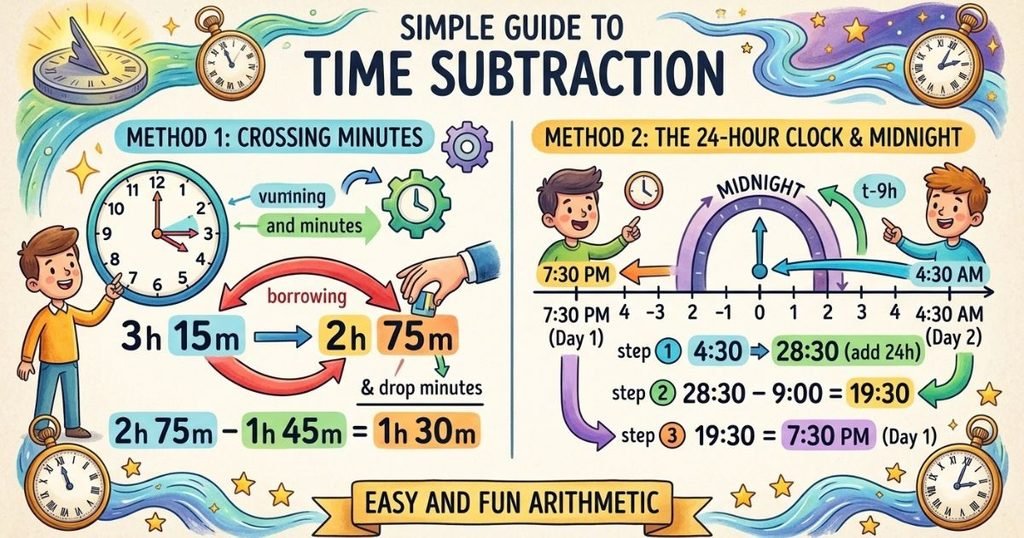
Time subtraction means moving backward from a specific time to find an earlier moment. You simply remove the number of hours or minutes you need. For example, subtracting 5 hours from 3:00 PM gives you 10:00 AM.
The process becomes easier when you understand clock patterns. You can count backward step by step or use a time calculator to get accurate results quickly. It helps you solve everyday time questions without confusion.
How Time Subtraction Actually Works
Time subtraction helps you find an earlier time by moving backward from the current moment. You can subtract hours, minutes, or seconds depending on what you need. For example, if it is 5 PM and you go back 5 hours, the answer is 12 PM.
The easiest way is to count backward carefully on the clock. A time calculator can also make the process faster and reduce mistakes when you need an exact result.
Why Reverse Time Calculation Matters in Everyday Life
Reverse time calculation is useful in many daily situations. You may need it to check past events, track work hours, plan schedules, or remember when something happened. It helps turn confusing time questions into simple answers.
From checking appointments to understanding travel times, knowing how to calculate backward makes life easier. It saves time and helps you stay organized when dealing with different schedules.
Why Reverse Time Calculation Matters in Everyday Life
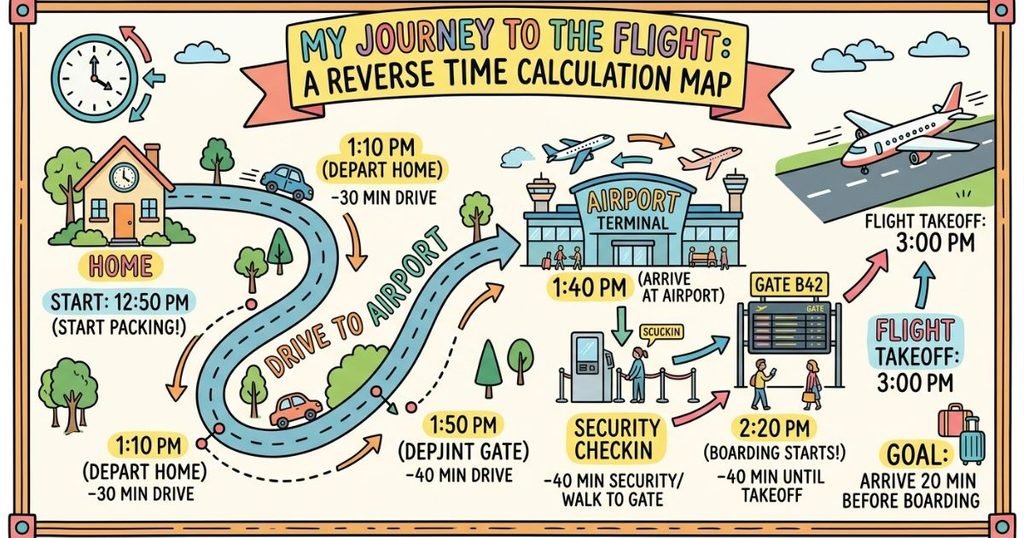
Reverse time calculation helps you find past moments by moving backward from a known time. It is useful when you need to calculate hours, check schedules, review events, or understand time clock times more clearly.
Many people use reverse time calculations for work planning, travel, reminders, and personal records. Instead of guessing when something happened, you can use a simple method or an hours calculator to get a more accurate answer. The interpretation may vary depending on the situation:
- Daily planning: Knowing what time was a few hours ago helps you track appointments, meetings, and important tasks without confusion.
- Work and productivity: Employees can use a work time calculator or hours worked calculator to review shifts, breaks, and completed hours.
- Travel and communication: Reverse calculations help compare different time zones and understand when messages, flights, or events occurred.
- Memory and record checking: Finding past times can help when reviewing notes, online activity, or personal experiences.
- Possible challenges: Manual calculations may become difficult when crossing midnight, changing time zones, or needing an hour exact result.
Read more: https://www.britannica.com/
What Time Was It 5 Hours Ago Using the 12-Hour Clock
Finding What Time Was It 5 Hours Ago with a 12-hour clock means counting backward five hours from the current time. This method uses AM and PM labels to show whether the earlier time was during the morning or evening.
The 12-hour clock divides the day into two periods of 12 hours each. When you subtract time, you need to pay attention to AM and PM changes. For example, if the time is 8:00 PM, going back 5 hours means the answer is 3:00 PM. The interpretation may vary depending on the situation:
- Simple subtraction: Start with the current hour and move backward five steps while keeping track of AM or PM.
- Crossing noon or midnight: The calculation may require changing from AM to PM or PM to AM when moving between different parts of the day.
- Using examples: Questions like what time was it 6 hours ago or what time was it 10 hours ago follow the same backward counting method.
- Checking accuracy: A time calculator work process or hour calculator can confirm the result when you need a quick and reliable answer.
- Understanding limits: The 12-hour clock can sometimes cause confusion because the same numbers appear twice each day.
What Time Was It 5 Hours Ago Using the 24-Hour Clock
Using the 24-hour clock makes What Time Was It 5 Hours Ago easier because each hour has a unique number. There is no need to check AM or PM, which helps you calculate hours with fewer mistakes.
The 24-hour format runs from 00:00 to 23:59. To find a past time, simply subtract five hours from the current hour. The interpretation may vary depending on the situation:
- Simple calculation: If the time is 18:00, subtracting 5 hours gives 13:00. This means the earlier time was 1:00 PM.
- Work schedules: The 24-hour clock is common in workplaces, hospitals, and transportation because it avoids confusion between morning and evening times.
- Using digital tools: An hours calculator or time clock calculator can quickly provide an hour exact result when manual counting feels difficult.
- International use: Many countries use the 24-hour format, making it helpful for global communication and travel planning.
- Better accuracy: The format reduces mistakes when comparing clock times across different locations.
Crossing Midnight: The Most Common Mistake
Crossing midnight is one of the biggest challenges when subtracting hours from a clock. It happens when you move backward past 12:00 AM and enter the previous day, which can confuse people during manual calculations.
When calculating What Time Was It 5 Hours Ago near midnight, you need to continue counting from the previous day. The interpretation may vary depending on the situation:
- Example before midnight: If it is 2:00 AM and you go back 5 hours, the answer is 9:00 PM from the previous day.
- Date changes: Remember that moving past midnight does not only change the hour; it also changes the calendar date.
- Common errors: People often subtract the hours correctly but forget to mention that the result belongs to yesterday.
- Using calculators: Tools like a time calculator work by handling midnight changes automatically and showing the correct result.
- Planning ahead: Understanding midnight calculations helps with flights, deadlines, reminders, and schedules that continue across days.
Manual Time Arithmetic Without a Calculator
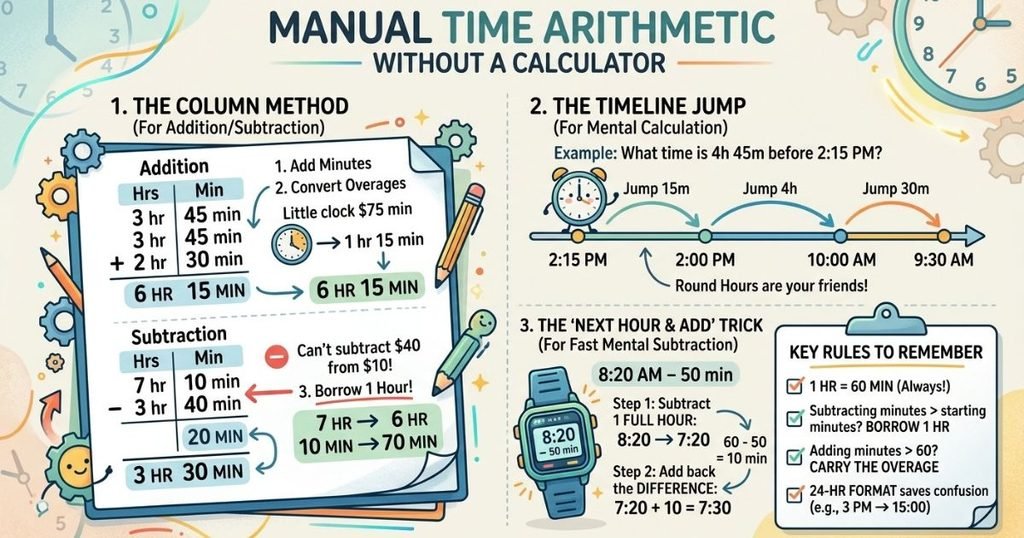
Manual time arithmetic allows you to find past or future times by counting hours step by step. This method is useful when you do not have access to a time calculator or need a quick answer. You can subtract hours by moving backward on a clock and checking whether you cross noon or midnight.
The process is simple, but you need to pay attention to hour changes and date changes. Whether you want to know What Time Was It 5 Hours Ago, calculate hours between events, or check time clock times, basic counting skills can help you get the correct result.
Example 1
If the current time is 3:00 PM and you want to know what time it was 5 hours ago, count backward one hour at a time. From 3:00 PM, move to 2:00 PM, 1:00 PM, 12:00 PM, 11:00 AM, and finally 10:00 AM. The answer is 10:00 AM.
Example 2
Imagine the time is 1:00 AM and you need to go back 5 hours. Count backward through midnight carefully: 12:00 AM, 11:00 PM, 10:00 PM, 9:00 PM, and 8:00 PM. The result is 8:00 PM from the previous day.
Example 3
If the time is 20:00 in a 24-hour clock format, subtracting 5 hours gives 15:00. This example shows how a simple hour calculator method works without needing any digital tool. It is useful for quick checks when you need an exact answer.
Using Online Time Calculators
Online time calculators make time calculations faster and easier when manual counting feels confusing. These tools help you subtract hours, add time, and find accurate results without worrying about mistakes. They are useful for questions like What Time Was It 5 Hours Ago, future time planning, and checking how many hours between events.
Many people use an hours calculator or time clock calculator for work, travel, and daily schedules. Tools such as a calculator.net time calculator can help you quickly calculate hours, compare time differences, and get an hour exact answer.
- Quick results: A time calculator gives answers within seconds and removes the need for manual counting.
- Work planning: A work hours calculator or work time calculator helps track shifts, breaks, and total hours worked.
- Future and past calculations: You can find answers for questions like what time was it 10 hours ago or what time it will be in 8 hours.
- Long durations: Tools can help calculate periods like 72 hours from now, now + 72 hours, or how long is 72 hours.
- Reduced errors: Online calculators are helpful when dealing with midnight changes or complex schedules.
Time Zones Make Everything More Interesting
Time zones add another layer of detail when you calculate past or future times. The same moment can have different clock readings depending on where someone is located. Understanding time zones helps you avoid confusion when working with international schedules.
A time difference can affect meetings, travel plans, and online communication. Before you calculate hours, check the correct location and time zone. The interpretation may vary depending on the situation:
- Global communication: A meeting at 9 AM in one country may happen at a different hour elsewhere.
- Travel planning: Flights often require careful time zone calculations to avoid missed connections.
- Digital records: Emails, messages, and online activity may show timestamps based on different settings.
- Daylight changes: Some regions adjust clocks during the year, which can affect calculations.
- Better accuracy: Using a time calculator with the correct time zone helps you find reliable results.
Real-Life Examples of Five-Hour Calculations
Five-hour calculations are useful in many everyday situations where you need to look back or plan ahead. Knowing What Time Was It 5 Hours Ago can help you manage schedules, track activities, and understand time differences more clearly.
People use these calculations for work, travel, personal reminders, and digital records. A simple time calculation can prevent confusion when checking past events or planning future tasks. The interpretation may vary depending on the situation:
| Situation | Example of Five-Hour Calculation | How It Helps |
| Work schedule tracking | An employee finishes work at 6 PM and checks what time they started after a five-hour shift. | A work time calculator can help confirm total hours worked and reduce mistakes. |
| Travel planning | A flight arrives at 8 PM, and you need to know the departure time five hours earlier. | Time calculations help organize travel plans and avoid missed schedules. |
| Online activity review | You see a message sent recently and want to know what time it was sent five hours before. | Reverse time calculation helps understand digital records accurately. |
| Medication reminders | A person needs to check when a dose was taken five hours earlier. | Accurate timing supports better daily organization and routine tracking. |
| Event planning | You want to know the start time of an event that lasted five hours before a known ending time. | An hour calculator can quickly find the missing time. |
| International communication | A meeting happened five hours before your local time in another region. | Time zone awareness helps avoid confusion between different locations. |
| Personal memory checks | You try to remember what happened earlier in the day by calculating backward. | Knowing time clock times makes it easier to rebuild a timeline. |
Medication Timing
Medication timing often requires accurate hour calculations to keep a regular schedule. Knowing the exact time a dose was taken or when the next dose is due can help people follow instructions properly and stay organized.
A reverse time calculation can help when you need to check past doses. For example, if you took medicine five hours ago and want to know the exact time, a time calculator can make the process easier. The interpretation may vary depending on the situation, but accurate tracking is always important.
Flight Timing
Flight schedules often involve calculating hours backward or forward. Travelers may need to know when a flight started, how long a journey lasted, or what the local time was several hours earlier.
Time zones can make flight calculations more challenging because departure and arrival locations may have different clock times. Using an hours calculator or time clock calculator can help you compare schedules and avoid confusion when planning trips.
Shift Calculation
Shift calculation helps workers understand start times, end times, and total working hours. Employees and managers often use tools like a work hours calculator or work time calculator to track schedules and breaks.
For example, if a shift ends at 8 PM and you need to know the starting time of a five-hour shift, you can subtract five hours to find the answer. Accurate hour calculations help with payroll records, planning, and managing daily responsibilities.
Memory Reconstruction
Memory reconstruction often involves looking back at past events and estimating when they happened. A simple reverse time calculation can help you connect moments, such as remembering what happened several hours earlier or checking when an activity took place.
People often ask questions like What Time Was It 5 Hours Ago when trying to rebuild a timeline. Whether you are reviewing a conversation, a meeting, or a personal event, using an hour calculator can make the process more accurate and easier to follow.
Gaming
Gaming often requires players to track time carefully, especially during timed challenges, events, and online matches. Knowing past and future times can help players manage sessions, cooldowns, and scheduled activities.
A time clock calculator can be useful when checking when a game starts or when an event will end. However, players should remember that server time zones may differ, which can affect time-based features and updates.
Human Perception Versus Digital Precision
People naturally estimate time based on memory and feelings, but human perception is not always exact. A few hours can feel shorter or longer depending on activities, attention, and daily routines.
Digital tools provide precise results by using exact clock values and calculations. A time calculator can quickly show results for questions like What Time Was It 5 Hours Ago, while human memory may only provide an approximate answer.
Tips for Accurate Reverse Time Calculation
Accurate reverse time calculation becomes easier when you follow a clear method. Checking the clock format, considering time zones, and using reliable tools can help you avoid common mistakes.
The interpretation may vary depending on the situation, but these simple tips can improve accuracy:
- Use a 12-hour or 24-hour clock consistently to avoid AM and PM confusion.
- Count backward carefully when crossing midnight or changing dates.
- Use an hours calculator when you need a quick and reliable result.
- Double-check the time zone before comparing different locations.
- Record important times to make future calculations easier.
Frequently asked Questions
How can I calculate it manually?
You can calculate What Time Was It 5 Hours Ago by moving backward five hours on a clock.
Check AM, PM, or date changes carefully to avoid common calculation mistakes.
Can a time calculator find past times accurately?
A time calculator helps you find past and future times quickly without manual counting.
It can calculate hours, compare schedules, and provide reliable results for different time needs.
Why is reverse time calculation useful?
Reverse time calculation helps track events, review schedules, and understand when activities happened.
It is useful for work planning, travel records, reminders, and personal time management.
How does the 24-hour clock help with time subtraction?
The 24-hour clock removes AM and PM confusion during calculations.
It makes subtracting hours easier when finding past times or comparing international schedules.
Can an hours calculator help with time questions?
Yes, an hours calculator can solve time differences and provide quick answers.
It is helpful when you need accurate results without counting hours manually.
Does a time zone change the calculation?
Time zones can change the displayed clock time for the same moment.
Always check the correct location before calculating hours between different regions.
How accurate is a five-hour time calculation?
A five-hour time calculation is accurate when the starting time is correct.
Using digital tools can reduce mistakes caused by midnight changes or time zone differences.
Where is What Time Was It 5 Hours Ago used in daily life?
People use What Time Was It 5 Hours Ago for checking messages, work shifts, appointments, and past activities.
It helps organize schedules and understand previous events more clearly.
Can I use a time clock calculator to find past times?
A time clock calculator can help you find previous times by subtracting specific hours.
It is useful for checking schedules, work records, and daily activities accurately.
How do I know the hour exact result when calculating backward?
You can get an hour’s exact result by using the correct starting time and subtracting hours carefully.
Online tools can also help confirm your answer and avoid calculation errors.
Conclusion
Finding What Time Was It 5 Hours Ago becomes simple when you understand basic time subtraction. This guide explained how reverse calculations help you check past moments quickly and clearly. Whether you use a time calculator or calculate manually, you can find accurate answers. These methods are useful for daily schedules, work, travel, and personal planning.
Using tools like an hours calculator or time clock calculator can save time and improve accuracy. Remember that What Time Was It 5 Hours Ago may change depending on time zones and clock formats. Learning these simple steps helps you handle time questions with confidence. With regular practice, you can make calculations faster and manage your daily activities more easily.